Your Trademark Has Not Been Used for Years: Can Someone Seek Its Removal?
27 November 2026
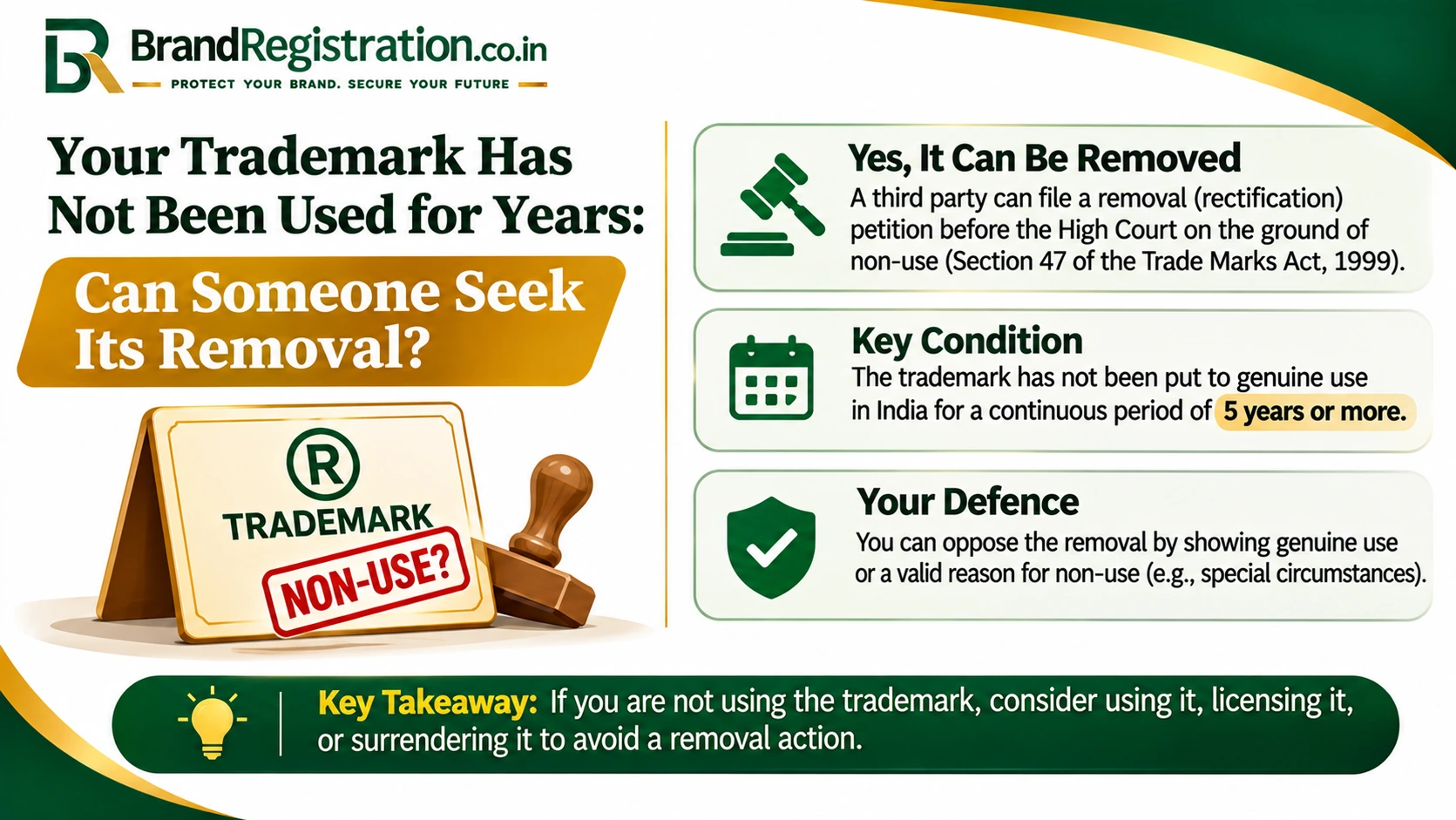
Table of Contents
Yes. A person with a genuine interest in the matter can seek trademark cancellation due to non-use under Section 47 of the Trade Marks Act, 1999, subject to the statutory conditions. Years of inactivity do not remove a registration automatically: the applicant must bring a case, and the registered proprietor has an opportunity to respond.
If you own the mark, the immediate question is whether you can show genuine use for the goods or services being challenged, or explain an applicable reason for non-use. If you are considering a challenge, start by identifying the exact registration and the commercial problem it creates; an unsuccessful internet search alone is not a complete case.
This guide separates what to establish before filing, the records each side should prepare, and what happens after submission. It also explains why a removal proceeding is different from an application to register your own brand.
1. Trademark cancellation due to non-use: who can seek it?
1.1 A genuine interest in the registration
Section 47 allows a “person aggrieved” to seek removal on the relevant non-use grounds. In practical terms, the applicant should be able to explain how the registration affects an actual legal or commercial interest, rather than merely expressing curiosity about another business’s mark.
That connection may arise when a registration obstructs a proposed brand, when a business faces an objection involving the registered mark, or when its activities put it in a dispute with the proprietor. The strength of the connection depends on the facts; simply working in a broad industry does not settle the question on its own.
Look at the registration as it stands on the Trade Marks Register. Identify its number, proprietor, mark and specification of goods or services. A similar name appearing in a search result is a starting point, not enough to show that the particular entry affects your business.
1.2 The non-use grounds and their limits
Section 47 addresses non-use, including circumstances concerning an absence of bona fide intention to use and an absence of bona fide use over the relevant statutory period. These are legal grounds with their own conditions; a challenger should identify the ground that fits the facts instead of treating every dormant-looking mark alike.
For the period-based ground, the statutory date calculation matters. The filing date, the date on which the mark was entered on the Register and the date on which a removal application is made are not interchangeable. The Act also contains a cut-off that affects the period examined. Work from the statutory wording and the registration history before deciding that a period has elapsed.
A registration obtained before a product launch is not, by that fact alone, proof that it was obtained without a genuine intention to use. Equally, a proprietor’s assertion that it may launch someday does not necessarily answer a properly supported non-use case. Each ground calls for an assessment of the relevant facts and dates.
Section 57 provides a broader route for rectifying or removing an entry on grounds other than, or in addition to, non-use. The two provisions should not be treated as interchangeable labels: identify the legal defect being alleged and the relief sought. An existing infringement suit can affect where and how a validity challenge is pursued, so forum selection deserves specific legal attention in a live dispute.
1.3 Removal can be partial
A registration may cover several goods or services. A challenge can concern only the part of the specification relevant to the alleged non-use, rather than every item in the entry. The available relief depends on the statutory conditions and the facts before the authority.
For example, a proprietor may have used a mark for one product line but not another. The challenger should consider which part of the registration creates its obstacle and whether the evidence supports a challenge to that part. Removing a narrow obstacle may serve the business objective without turning the case into a dispute about unrelated products.
2. Documents and evidence to prepare
There is no universal bundle that proves every non-use dispute. Prepare records that establish the registration, explain the parties’ positions and connect the evidence to the goods or services in issue. Use clear digital copies for an online submission, and retain the originals and underlying files where they exist.
2.1 For the person seeking removal
Registration record: Obtain the relevant Register or status record and, if available, the registration certificate. These identify the entry, its proprietor and the scope of the goods or services challenged.
Statement of interest: Assemble records showing why the entry affects you, such as a related business plan, application record, objection or correspondence. Their purpose is to support your position as a person aggrieved.
Chronology: Set out the dates relevant to the chosen ground and explain their source. Distinguish dates obtained from the Register from dates inferred from your own investigation.
Investigation material: Keep dated search results, market enquiries and other relevant findings, with a record of where and how the search was carried out. A report should identify the searches made as well as their limits.
Statement and supporting evidence: Organise the facts, legal ground and requested relief in a coherent statement, with supporting material indexed so that each assertion can be traced to its source.
Authority to act: Where a representative is engaged, prepare the applicable authorisation in the format required for that proceeding.
Absence is difficult to prove. A search confined to one marketplace, one spelling or one location may miss genuine trade elsewhere. Preserve the search terms, dates and sources so that the decision-maker can assess what the investigation actually establishes; do not describe a limited search as a complete survey of the market.
2.2 For the registered proprietor
Collect evidence that links the mark to real trade in the relevant goods or services. Depending on the business, useful records can include dated invoices, product packaging, catalogues, advertising, service proposals, orders and records of delivery. Documents are more useful when they show the mark, the relevant offering and a date, rather than only a company name.
Build a separate file for each challenged product or service. A sales ledger may establish transactions but not show the mark as customers saw it; a package image may show the mark but not establish when the product was sold. Related records can fill those gaps when they can be reliably connected.
If another party used the mark with the proprietor’s permission, preserve the agreement and records explaining the relationship and use. Where the defence relies on circumstances that prevented use, retain contemporaneous material describing the event, its duration and its effect on the particular trade.
3. How to start and pursue a removal application
A removal case is a contested proceeding, not a simple request to delete an entry. The Trade Marks Registry operates through IP India. Court proceedings have their own filing systems and procedural requirements, which should not be assumed to match the Registry’s online process.
Define the commercial objective. Decide whether you need the whole entry challenged or only specified goods or services. Identify your interest in the entry and the non-use ground on which you intend to rely.
Choose the appropriate forum. Consider whether the matter belongs before the Registrar or a High Court and whether existing infringement litigation affects that choice. A case already in court is a point at which tailored legal advice can prevent a filing in the wrong forum.
Prepare the case before submission. Put the facts in date order, specify the entry and relief sought, and organise the supporting material. Separate facts you know directly from conclusions drawn from searches or enquiries.
Use the relevant filing channel. For a Registry proceeding, use the applicable application and submission route made available through IP India, and pay the prescribed official fee. For a court proceeding, follow the applicable court filing requirements rather than assuming the Registry portal will receive it.
Keep the filing record. Retain the submitted application, attachments, payment record and acknowledgement. The acknowledgement helps you track the matter; it is not a decision removing the mark.
Respond as the case progresses. Monitor communications and comply with directions concerning service, statements, evidence and any hearing. The proprietor may contest the application, so the applicant should be ready to address the response rather than treating filing as the end of the process.
Review the order and its effect. Read the final decision against the precise registration and goods or services concerned. Take any further action required by the order or applicable procedure, and review the Register before relying on the outcome commercially.
Before submitting, make sure that the relief requested matches the business problem. A challenge directed at an entire specification may require a broader factual case than one directed at a defined product category. The wording of the application also gives the proprietor notice of what it must answer.
If you are the proprietor receiving a challenge, record the date and contents of the communication immediately and identify any response requirements stated in it. Do not assume that discussions with the challenger suspend a procedural deadline. A negotiated resolution and a formal response strategy may need to run in parallel.
4. Government charges and professional costs
The official filing charge and the cost of pursuing a contested case are different items. The Trade Marks Rules, 2017 provide for fees in the First Schedule; IP India publishes a forms and official fees page. The applicable charge depends on the proceeding and filing channel, so use the current entry for the intended application rather than the fee for a new trademark registration.
Government filing charge: The prescribed fee accompanying the relevant Registry application. Under Rule 10, a document filed without the required fee or with insufficient fee is deemed not filed for the purposes of proceedings under the Rules.
Preparation and representation: A professional quote may cover analysis, drafting, filing, correspondence or hearing work. Ask which stages are included and which are billed separately.
Evidence gathering: Searches, market enquiries, document retrieval and preparation of witness material can add cost. The appropriate extent depends on the goods or services and the issues in dispute.
Court and later-stage expenses: A court matter may involve a different fee structure. A contested response, hearing or further challenge can also change the budget.
Request a written scope of work before engaging assistance. It should say whether the price covers only initial filing or also includes reviewing the other side’s response, preparing evidence and attending a hearing. This distinction makes competing quotes easier to compare and avoids mistaking the smallest initial quote for the cost of the whole dispute.
5. How long can a contested removal take?
There is no verified processing benchmark in the supplied official material for a contested non-use removal. Plan around milestones rather than a promised completion date: preparation, submission, the other party’s response, evidence, any hearing, a decision and the resulting Register position.
Preparation time depends on how readily the registration history and relevant commercial records can be assembled. After filing, the length of the case can vary with the number of disputed issues, the evidence submitted, directions made by the authority and the availability of a hearing. An existing court dispute can introduce a separate procedural path.
For a planned launch, distinguish the date you hope to begin using a brand from the date you might obtain a final decision. A pending removal application does not by itself erase the earlier entry. Budget for uncertainty and consider whether a different brand or a narrower commercial launch would reduce the exposure while the matter remains unresolved.
6. Defending a registration against a non-use challenge
A trademark non use defence should address the actual goods or services and the ground alleged. Begin by reading the application and separating what it says about intention, use and the requested scope of removal. A response that relies on a general claim that the business is active may leave a specific product category unanswered.
Bona fide use is assessed on the facts. The nature of the market can matter: a specialist service may leave a different commercial trail from a consumer product sold through shops. Evidence should explain the transaction or activity and its connection to the mark, rather than relying solely on an undated image or a statement of future plans.
The Act also recognises special circumstances in trade in the non-use context. A proprietor relying on that protection needs to connect the circumstances to the period and the inability to use the mark; a bare reference to difficult business conditions is not a substitute for explaining what happened. Whether the statutory conditions are satisfied is a legal and factual question.
Do not create a retrospective record or suggest that a planned launch already occurred. If evidence is incomplete, identify what is missing, where it may be held and whether a witness can explain the underlying events. The quality of the explanation matters as much as the volume of pages in the bundle.
Ask sales, finance, marketing and operations teams for records separately. The person holding an invoice may not hold the artwork, product photographs or customer correspondence needed to show how the mark appeared in the same transaction.
7. Mistakes that weaken a challenge or defence
Using the wrong registration: Similar marks and related proprietors can appear in searches. Challenging the wrong entry can leave the actual obstacle untouched. Match the registration number and specification to the entry affecting the business.
Counting from a convenient date: A company’s first idea for a brand or its application filing date may not be the relevant statutory starting point. Reconstruct the dates from the registration record and apply the wording of the ground relied on.
Overstating a search: A claim that a mark was never used is difficult to support if the search covered only a few websites. Describe the investigation accurately and expand it where the commercial context makes that necessary.
Seeking more relief than the facts support: An allegation about one product does not automatically establish non-use for every service in a specification. Align the requested variation or removal with the case actually being advanced.
Confusing a filing with a favourable order: Filing may start a dispute but does not give the applicant ownership of the mark or clear every risk associated with a launch. Keep the launch decision separate from the procedural step.
Ignoring the forum: A pending infringement case can change the analysis of a validity challenge. Review the litigation position before choosing a filing route; do not assume an online Registry submission resolves the forum question.
8. What to do after the decision
Read the operative part of the order carefully. It may affect the whole registration or only particular goods or services, and the position may be subject to further proceedings. Compare the order with the Register rather than relying on a short status label or an informal account of the result.
For a successful challenger, removal of an obstacle is not the same as receiving a new registration. Other earlier rights or applications may remain relevant, and a separate application and examination process may still be needed. If your next goal is to secure your own brand, Trademark Registration is a separate step from the removal case.
For a proprietor whose registration remains, organise ongoing evidence by mark, product or service and date. Keep samples of customer-facing material alongside records of actual business activity, so that a later enquiry can be answered without reconstructing years of transactions from memory.
Use and renewal are separate questions. A registration that remains on the Register is not automatically immune from a later non-use challenge, while a non-use dispute does not itself decide every renewal issue. Maintain an internal calendar for the registration and review whether the specification still reflects the business’s genuine plans and activities.
9. Choose your next three actions
If you want to challenge: identify the exact entry that affects your business and decide which goods or services are commercially relevant. If you own the mark, identify the specific allegations and any stated response requirements.
Build the right file: a challenger should document its interest and investigation; a proprietor should organise the use and circumstances it intends to rely on. Where evidence is held by another team or representative, assign responsibility for obtaining it.
Choose the route: proceed through the appropriate Registry channel if the matter is suitable, or obtain legal help on forum and strategy where litigation, partial relief or a contested factual record makes the choice difficult.
Begin the process online via the official government portal, or engage Brand Registration for end-to-end assistance
Frequently Asked Questions
Can someone seek removal of an unused registered trademark?
Yes. A person aggrieved can seek removal under Section 47 of the Trade Marks Act, 1999 if the applicable non-use ground and its conditions are established. The registered proprietor can respond to the challenge.
Does non-use cancel a trademark automatically?
No. A period of inactivity does not by itself remove the entry from the Register. A removal case must be brought and decided through the applicable process.
Who can challenge a registration for non-use?
A person aggrieved may apply. The applicant should explain a genuine legal or commercial interest in the entry, such as how it affects a proposed brand or an existing dispute.
Can removal be limited to some registered goods or services?
Yes. A challenge can target the relevant part of a specification rather than the whole entry. The relief available depends on the statutory conditions and the evidence.
What evidence can support a non-use defence?
Depending on the business, dated invoices, packaging, catalogues, advertisements, orders and delivery records may help show genuine use. The evidence should connect the mark to the relevant goods or services and period.
Can special circumstances explain a period of non-use?
Section 47 recognises special circumstances in trade in the non-use context. A proprietor relying on them should explain the circumstances and their connection to the inability to use the mark; the statutory conditions must be satisfied.
Does successful removal give the challenger a trademark registration?
No. Removal of another entry does not itself register the challenger’s mark. A separate registration application and examination may still be needed, and other rights may remain relevant.
How much does a removal application cost and how long does it take?
The applicable official charge depends on the proceeding and filing channel. Professional work, investigation and hearings can add to the cost. A contested case has no verified completion benchmark in the supplied official material, and timing varies with the issues and procedural stages.
Recent Blogs
Licenses
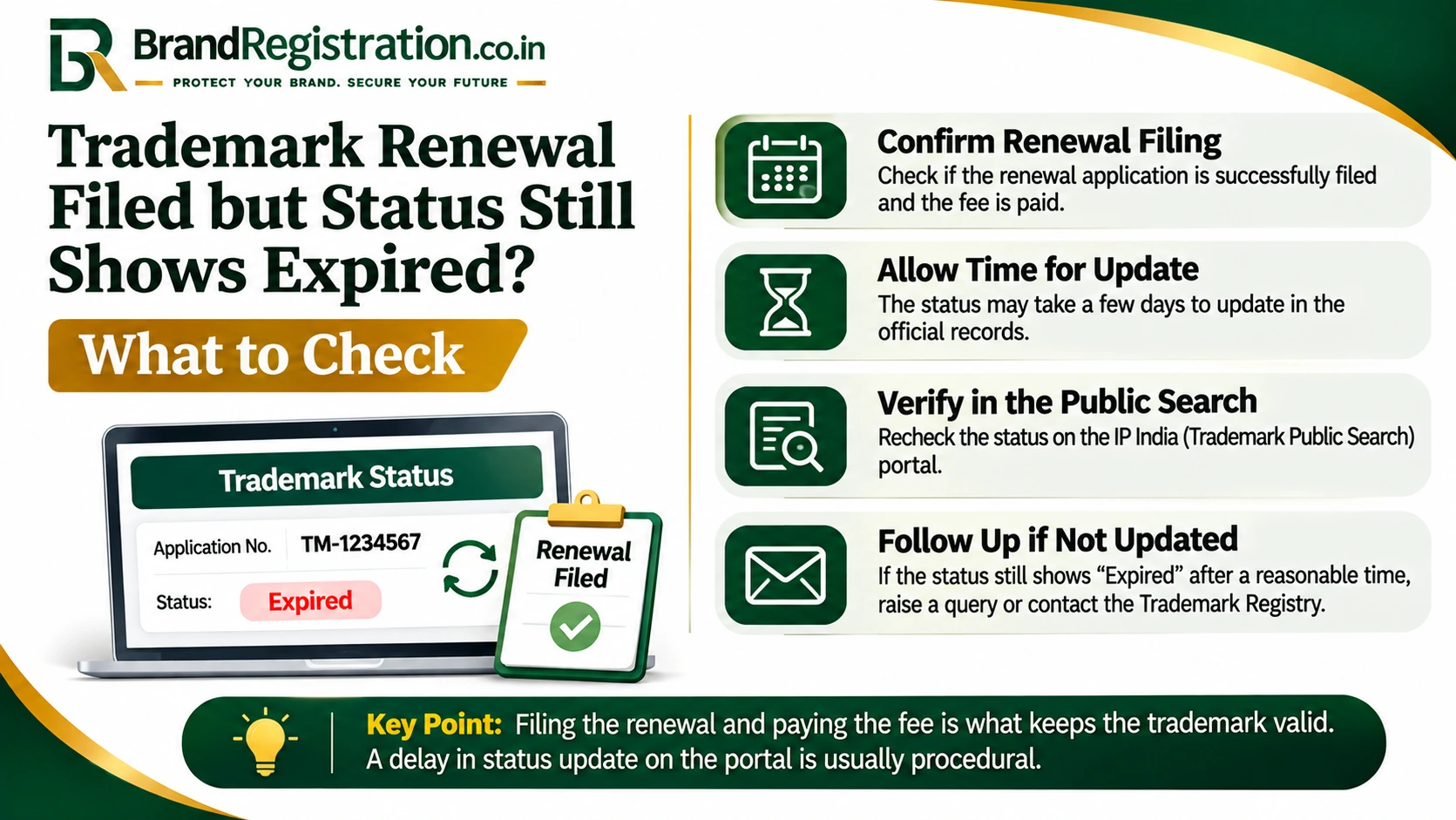
Trademark Renewal Filed but Status Still Shows Expired? What to Check
27 November 2026

Licenses
Trademark Owner Has Passed Away: What Can Legal Heirs Do About the Registration?
27 November 2026
Licenses
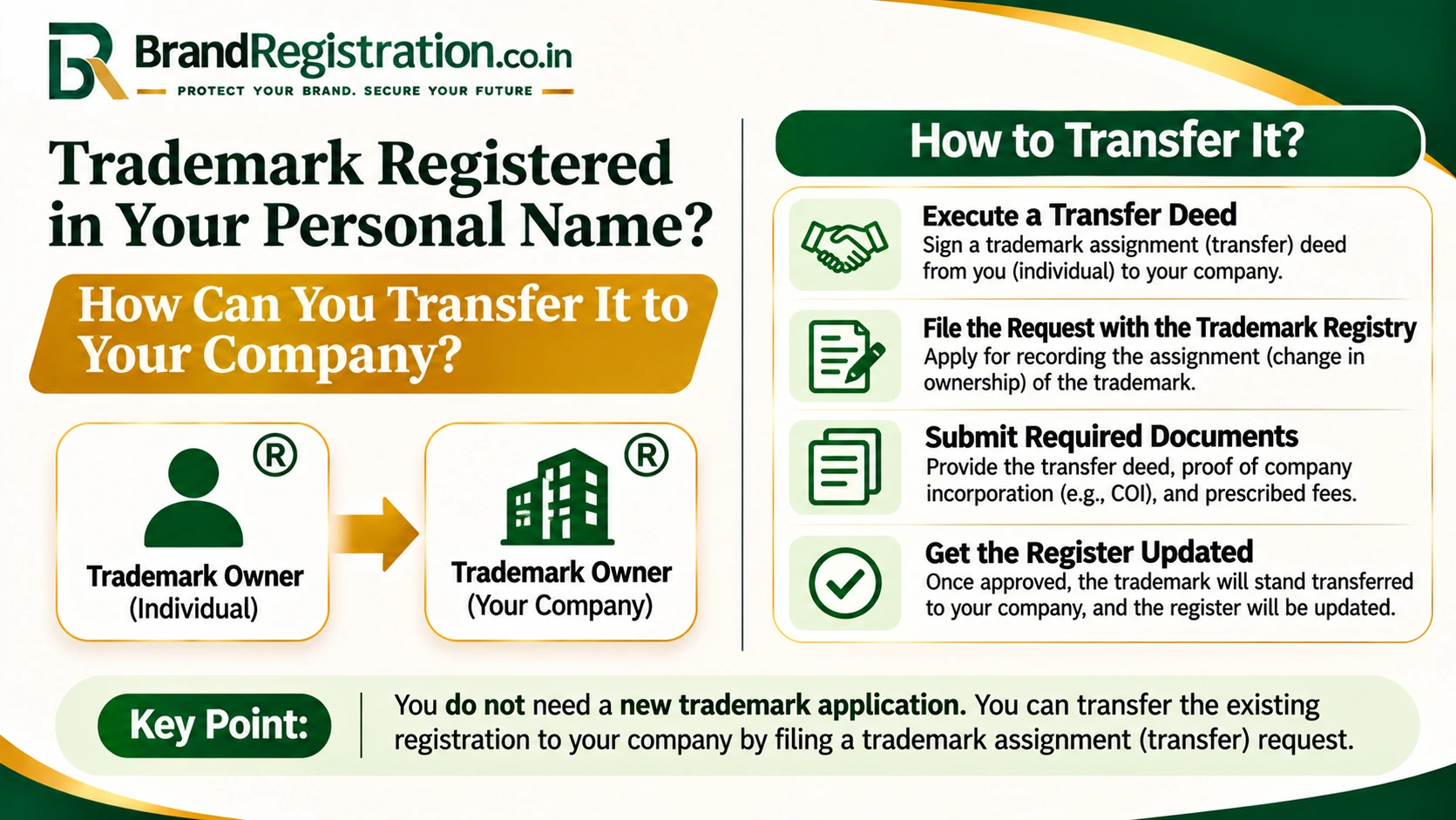
Trademark Registered in Your Personal Name? How Can You Transfer It to Your Company?
27 November 2026