A Similar Brand Name Is Already Registered in Another Class: Can You Still Apply for a Trademark?
19 November 2026

Table of Contents
Yes. You can apply for a similar trademark in a different class in India, even if another business has registered a similar name. Registration is not automatic: the Trade Marks Registry can consider the similarity of the marks, the relationship between the goods or services, and the earlier mark’s reputation and rights.
For brand registration, the decision is whether your proposed name can distinguish your business without creating a conflict with an earlier owner. The guide below takes you from that assessment through preparation, filing, costs and post-registration action.
1. When can a similar trademark in a different class qualify?
1.1 What classes do
Trademark classes organise goods and services for an application. India uses the Nice Classification, with Classes 1–34 for goods and Classes 35–45 for services. Your application identifies the class and describes the goods or services for which protection is sought.
A class number is a filing category, not a boundary that prevents all disputes. Two entries in separate classes may cover commercially connected offerings. Equally, two entries within a broad class may cover quite different offerings. Read the description of what each mark covers, rather than deciding from the number alone.
Choosing a class also does not give an applicant rights over every item in it. The specification—the wording that describes the goods or services—matters. It should reflect the business’s actual offering and the protection it seeks, rather than being a list copied because it sounds broad.
1.2 The Section 11 test
Section 11 of the Trade Marks Act, 1999 sets out relative grounds for refusal. Under Section 11(1), an earlier mark can be relevant where the marks and the respective goods or services are identical or similar and the statutory test for a likelihood of confusion is met. The assessment includes the likelihood of association with the earlier mark.
For trademark registration, likelihood of confusion is a question about the overall impression on customers. Consider how the names look and sound, what they suggest, and whether buyers may think the offerings come from the same business or economically connected businesses. A different spelling may not change the pronunciation; different packaging may not eliminate a strong similarity in the names.
The relationship between offerings matters too. Compare their purpose, buyers, sales channels and the circumstances in which customers encounter them. Separate industries can reduce the risk, but a statement that “we sell different products” is less useful than an explanation of those actual differences.
1.3 Reputation and earlier use
Section 11(2) addresses an additional situation involving an earlier registered trademark that is well known in India. Even for dissimilar goods or services, the provision can apply where use without due cause would take unfair advantage of, or be detrimental to, the distinctive character or repute of that earlier mark. A famous name therefore deserves particular care even when the proposed business operates in a different field.
Unregistered rights can matter as well. Section 11(3) recognises, among other grounds, that an earlier right enforceable through passing off can prevent registration. A clear Registry search is useful evidence for a decision, but it cannot by itself establish that nobody has an enforceable earlier claim.
Section 12 permits the Registrar, in cases of honest concurrent use or other special circumstances, to allow registration subject to conditions or limitations. It is not an automatic exemption for a later applicant. The facts of adoption and use matter, and an application relying on them calls for a careful assessment.
1.4 Who can apply?
An individual can apply for a trademark; incorporating a company is not a prerequisite. A business name can also be a trademark if it functions as a sign distinguishing the applicant’s goods or services and meets the registration requirements. The applicant should be the person or entity claiming ownership of the mark, not merely the person completing the form.
A business name is generally protected as a name through trademark law rather than by “copyrighting” the name itself. Copyright questions may arise separately for an original artistic logo or other creative material. Registering a company name or obtaining a domain name is not a substitute for assessing trademark rights.
2. What should you prepare before filing?
Prepare the application information around the mark and the applicant’s real business. Some supporting material is conditional: a proposed-to-be-used mark, for example, does not have a past-use history to document. The IP India filing interface and the circumstances of the application determine which attachments apply.
Applicant details: the legal name, address and applicant type identify who claims the mark. An individual should use their own legal identity; an entity should use its legal identity.
Mark representation: supply the name as the word mark to be claimed, or a clear digital representation if applying for a logo or label. A word application and an application for a particular logo are different filing choices.
Goods or services: prepare a precise written specification and the appropriate class or classes. This defines the commercial scope requested in the application.
Use information: state whether the mark is proposed to be used or is already in use. Where prior use is claimed, prepare the claimed date and supporting affidavit and material applicable to that claim.
Evidence of use, where applicable: dated invoices, packaging, advertisements or other business records can help establish how the mark was used for the relevant offering. Organise them by date and identify the applicant or its connection to the use.
Authorisation, where an agent is appointed: prepare the applicable authorisation in Form TM-48 so the representative can act for the applicant.
Applicant-category support, where relevant: retain the applicable supporting material if claiming a filing-fee category available to a startup or small enterprise.
For similar trademark registration in India, keep a separate internal note of the earlier records you have found and the differences you intend to rely on. That note is a preparation tool; it is not a substitute for the application’s required particulars. If a conflict later becomes contested, an organised record makes it easier to explain the decision and assemble a response.
A logo file should show the mark you actually intend to submit, not a mock-up surrounded by unrelated advertising. If the commercial value lies mainly in the name, consider whether a word application is appropriate before deciding to file only a stylised design. Neither choice should be assumed to give an unlimited monopoly over every appearance or use of the words.
3. How to search and file on IP India
Use the Trade Marks Registry services available through IP India. Treat search, submission and follow-up as separate stages: a search result is information for a decision, while filing starts the Registry’s examination of the application.
Search the proposed name. Use the public trademark search to look for the exact wording, obvious spelling variations and similar-sounding names. Search the class appropriate to your offering and other classes in which related goods or services may appear. Where useful, search significant parts of a longer name as well as the full phrase.
Open relevant records. Compare the mark shown, owner, application status and the actual specification. Note the application and claimed-use dates where shown, but do not treat either date alone as a final ruling on priority. Save the record details so you can return to them if the status changes.
Investigate outside the register. Look for actual marketplace use of close names, including business websites, product listings and advertising. These checks can reveal a possible earlier user or a reputation that a class-filtered search does not adequately show. Keep a record of what you found and when.
Decide the scope and route. Identify the mark, applicant and specifications you intend to file. If the result suggests a substantial conflict, pause to assess whether to change the name, seek advice about coexistence, or proceed with a reasoned position. Do not select an unrelated class merely because it appears clearer.
File Form TM-A. Use the Trade Marks Registry’s e-filing service through IP India, complete the application, attach the applicable material, pay the portal-calculated government charge and retain the acknowledgement and application number. Form TM-A is the application route for trademark registration; the class and specification determine the scope requested.
Monitor the application. Review Registry communications and status updates, then respond to an examination objection or attend a hearing if required. If the application is advertised, watch for opposition and comply with the directions and deadlines in any notice. Registration follows only if the application completes the applicable stages successfully.
3.1 Reading a search result
A result marked registered is different from an application that is still pending, but a pending application should not simply be ignored. It may proceed, and its recorded details can be relevant to the assessment. Conversely, a status such as abandoned or removed does not prove that the name has never been used or that all other rights have disappeared.
Do not rely only on a search-list snippet. The full record may show a narrow specification that changes the commercial comparison, or a broader one than the search label suggests. For a logo, look at both the visual presentation and the words that customers are likely to use when asking for the product or service.
Search results also support a budgeting decision. A close record may mean an application needs a more considered response or a negotiated solution; it may also make a fresh name preferable before launch. Record the reason for proceeding, rather than treating the portal’s acceptance of a filing as proof that the mark is available.
4. What will the application cost?
The government filing charge and the amount a professional charges for assistance are separate. The precise official amount depends on the applicable filing category, class coverage and filing method. The current payable amount is shown in the Registry’s fee schedule and filing workflow; it should not be confused with a service provider’s quote.
Cost component | What to budget for |
|---|---|
Government application charge | The official charge associated with the application and its class coverage, payable to the Registry. |
Search and filing assistance | Optional professional work; ask whether the quote covers a cross-class search, drafting and submission. |
Examination response or hearing | Possible additional professional work if the Registry raises an objection or calls a hearing. |
Opposition or negotiation | Potential separate costs if another party challenges the application or the parties discuss coexistence. |
Renewal and later changes | Future official charges and any assistance required for renewal or record updates. |
For trademark registration despite a similar mark, ask for a written scope of work before accepting a quote. A low filing price may cover form submission but not the comparison of earlier records, a reply to an examination report, or representation in an opposition. Those differences matter more than the headline price when a close mark has already been found.
Also budget for business changes that may follow a conflict: revised packaging, a new domain, customer communications and replacement of promotional material. Those are commercial costs rather than Registry fees, but they can make an early decision about the name financially significant. A paid filing does not buy a guaranteed registration or a refund of branding expenditure.
5. How long can the decision take?
There is no single dependable completion time for an individual application. It moves through filing, examination and, if accepted for advertisement, publication in the Trade Marks Journal. An objection, hearing or opposition can add stages; the Registry’s workload and the parties’ responses also affect the duration.
Section 21 of the Trade Marks Act provides a four-month period from advertisement or re-advertisement for giving notice of opposition. Publication is therefore a milestone, not a registration certificate. An application that faces an opposition cannot be assessed against the same timetable as one that encounters no challenge.
The filing acknowledgement is useful for tracking, but it should not be confused with examination being complete. A status change may require action, while a period without an update does not establish that the application has succeeded or failed. Keep the acknowledgement and monitor the official record rather than planning a launch around an assumed grant date.
If a trademark registered in another class has been identified, the time needed to analyse the record or negotiate with its owner is separate from Registry processing. Allow for that work before committing to an irreversible launch date. The available evidence does not establish a current, reliable average processing benchmark for this article.
6. Which mistakes create avoidable conflict?
Changing only a minor spelling. A deceptively similar trademark may still sound or appear close to an earlier one. Compare the complete impression, including how a customer would say and remember the name; if similarity remains strong, consider a more distinctive alternative.
Treating a different class as permission to use. Filing does not settle the earlier owner’s rights or eliminate the possibility of a challenge. Assess the commercial relationship and the earlier record before spending heavily on the name.
Selecting a class to avoid a search result. An unrelated class does not describe the goods or services the business actually offers. Reassess the proper classification and seek advice on the available filing route if an application has already been submitted; do not assume a class change will preserve the original filing position.
Claiming an unsupported use date. A date is meaningful only in the context of the mark, applicant and goods or services concerned. Use records that support the claim actually made; if the mark has not been used, do not invent a trading history.
Filing under the wrong owner. A founder, an agency and a company can be separate legal persons. Establish who owns the mark before submission and seek advice promptly if the filed particulars do not reflect the intended owner.
Ignoring a Registry notice. An examination objection and an opposition are different proceedings, each requiring attention to the communication received. Read the cited grounds, preserve the notice and prepare a response addressed to the actual issue rather than sending a generic denial.
Assuming consent settles everything. An earlier owner may agree to discuss coexistence, but the wording, commercial limits and legal effect of any agreement matter. Consent does not guarantee that the Registrar will accept an application or that no other owner has a relevant claim.
An application number is not a grant of registration. If you receive a notice from the Registry or another trademark owner, treat its stated deadline and grounds as a priority; missing a procedural response can seriously affect the application or your position.
7. What happens after registration?
Keep the registration certificate and the final specification with your brand records. They show what was registered and for which goods or services. Use the registered mark in a way that remains connected to the business and the covered offering; maintain dated records of genuine commercial use rather than relying on the certificate alone.
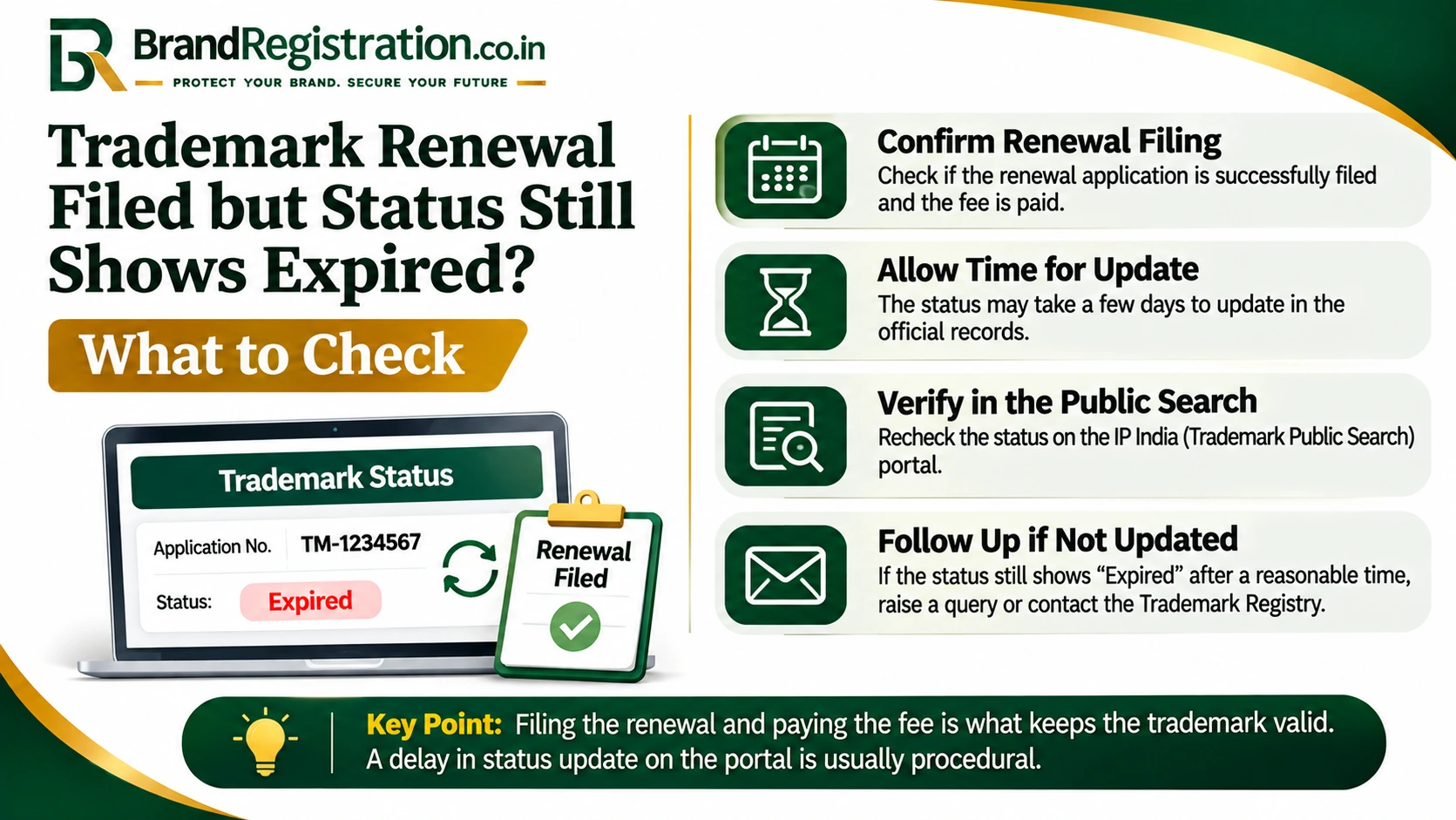
Under Section 25 of the Trade Marks Act, registration is for ten years and may be renewed for further ten-year periods. Renewal is the step needed to maintain the registration. Diary the relevant date, keep contact details current and retain proof of the renewal filing and payment.
Record changes in ownership or other relevant particulars through the appropriate Registry procedure when they occur. If the mark is licensed, document who may use it and the permitted scope. These records help the owner manage the registration and explain the relationship between the registered proprietor and actual users.
Monitoring is a practical recommendation, not a condition that every owner search the register on a fixed schedule. Look for later applications and marketplace use that could affect your brand, including related offerings outside your own class. Trademark cross-class protection depends on the facts and legal grounds; the existence of your registration does not automatically stop every later use in another field.
8. Choose your next move
Can two trademarks have the same name, or can the same trademark name cover different products? Sometimes. The decision turns on the particular earlier rights and the relationship between the offerings, not a universal rule that permits or forbids every matching name.
Build a comparison. Put your proposed mark and specification beside the closest earlier records and any significant marketplace use. If the differences are substantial and no other material concern emerges, prepare a filing that accurately describes your business.
Choose a response to serious overlap. If the names and offerings are close, price a distinctive replacement before launch. If there is an established business reason to keep the name, obtain advice on the evidence, potential coexistence terms and exposure to a dispute before approaching the other owner or filing.
Set a filing and monitoring plan. Decide who will own the application, who will handle Registry communications and how the business will fund an objection or opposition if one occurs. For assisted preparation and filing, review Brand Registration’s Trademark Registration service.
Begin the process online via the official government portal, or engage Brand Registration for end-to-end assistance
Frequently Asked Questions
Can two businesses register the same trademark name in different classes?
They may be able to, depending on the marks, the goods or services, earlier rights and the likelihood of confusion. Different class numbers alone do not guarantee that both applications can be registered.
Does an earlier registration in another class automatically block my application?
No. The Registry considers the applicable legal grounds and the facts. Related offerings, a likelihood of confusion, a well-known earlier mark or other earlier rights can still create a conflict across classes.
Can I apply for a trademark without forming a company?
Yes. An individual can apply. The application should identify the person or entity claiming ownership of the mark and describe the relevant goods or services.
Should I copyright or trademark my business name?
A business name used to distinguish goods or services is generally a trademark question rather than a copyright registration question. An original artistic logo or other creative material may raise separate copyright issues.
Does filing a logo automatically protect the name in every style?
A logo application concerns the representation filed. A word mark and a stylised logo are different filing choices, so do not assume that a logo filing gives unlimited protection over the words in every form.
What is the difference between an objection and an opposition?
An objection is raised during Registry examination. An opposition is a challenge by another party after advertisement of the application. Each has its own procedure, and the applicant should respond to the particular notice received.
Will the earlier owner's consent guarantee registration?
No. Consent or a coexistence agreement may be relevant, but its terms matter and it does not guarantee acceptance by the Registrar or resolve rights held by other parties.
How long does an Indian trademark registration last?
Under Section 25 of the Trade Marks Act, registration is for ten years and can be renewed for further ten-year periods. The owner should track the renewal date and complete the applicable renewal procedure.